

The more capable technology becomes, the more important human judgment becomes.
That was one of my strongest takeaways from The Manila Times Student Forum 2026, themed “Protecting Learners, Empowering Education.” The forum explored the opportunities and risks presented by artificial intelligence, cybersecurity, digital learning, and online safety, all within the context of preparing the next generation for an increasingly technology-driven future.
One idea stayed with me throughout the discussions: we now live in two interconnected worlds — the physical world and the digital world. Whether we like it or not, our personal and professional lives are intertwined with both. Success today requires not only the ability to navigate these worlds productively, but also the discipline to question the technology we increasingly rely on.
I experience this from two perspectives.
As an MBA student, I normally use AI to organize ideas or identify research sources. As an auditor, however, I am constantly reminded that every conclusion must still be validated and supported by evidence. That contrast made the forum’s message particularly relevant to me.
AI can help us arrive at answers faster. It cannot take responsibility for those answers.
Regardless of how advanced the tool becomes, accountability ultimately rests with the person using it. The forum reminded me that while technology can support both learning and professional work, it should never replace the discipline of questioning information and thinking independently.
This point was perfectly captured by one of our own speakers, Ms. Sheila Deblois, Partner of Audit Services at Reyes Tacandong & Co., when she said:
“Let AI expand your capabilities, but never outsource your curiosity, your integrity, or your responsibility.”
The statement reflects a principle deeply embedded in auditing. Our profession is built on trust. We are expected to evaluate evidence, challenge assumptions, and exercise professional skepticism before reaching conclusions. AI can enhance these processes, but accountability for the final judgment remains with the auditor.
This is where an auditor’s mindset offers a useful perspective on AI.
Professional skepticism does not mean distrusting every piece of information we receive. It means maintaining a questioning mind: considering the source, looking for evidence that supports or contradicts an answer, and being willing to reconsider a conclusion when the facts require it.
Those habits matter in an audit, but I believe they are becoming increasingly relevant to anyone working with AI.
For students, this could mean learning not only how to use an AI tool, but also how to question its output: Where did this information come from? What assumptions does it make? What might be missing? Can I verify it independently? Would I be prepared to defend this conclusion as my own?
The real value of technology is not that it thinks for us, but that it gives us more time and better information to think critically.
Perhaps the greater risk is not simply that AI will replace certain human tasks, but that easy access to answers may make us less inclined to exercise our own judgment.
As AI becomes more deeply integrated into education and business, this has important implications for students. Tomorrow’s professionals will grow up with technology that is far more powerful and accessible than what previous generations experienced. Technical skills will remain important, but qualities such as curiosity, integrity, accountability, and critical thinking will become even more valuable as technology becomes more capable.
If students remember only one piece of advice five years from now, I hope it is this: learn how to use AI, but do not allow AI to replace your ability to think.
Technology will continue to evolve, and access to increasingly capable tools will become more common. Knowing how to use them will matter. But knowing when to question an answer, when to look for better evidence, and when to rely on your own judgment will matter just as much.
Perhaps that is the more important skill in navigating our two worlds.
AI can help us reach an answer. The responsibility for deciding whether it is an answer we can stand behind remains ours.
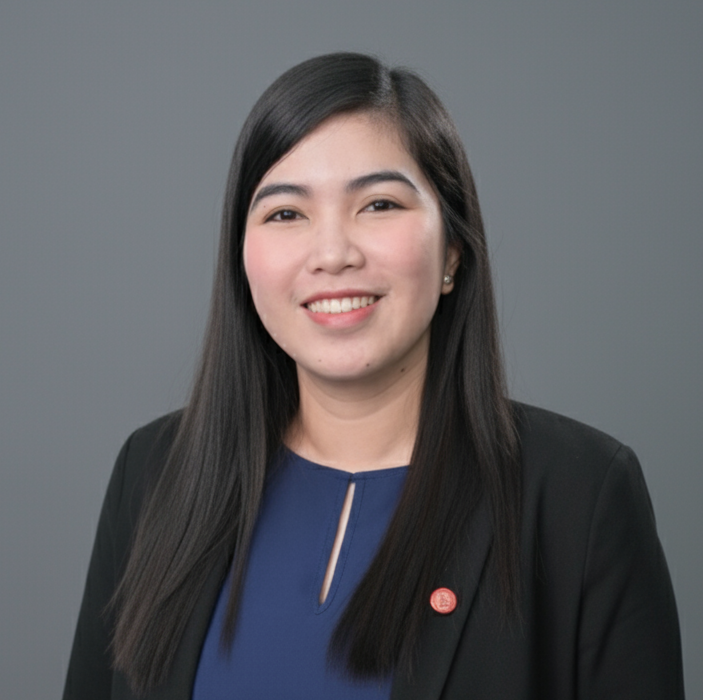
Kristine Margarette C. Navas, CPA
Senior Manager | Audit Services
Contact us today. We’ll schedule a complimentary assessment of your company.
Let RT&Co help your business. Send your request for a proposal of services here.